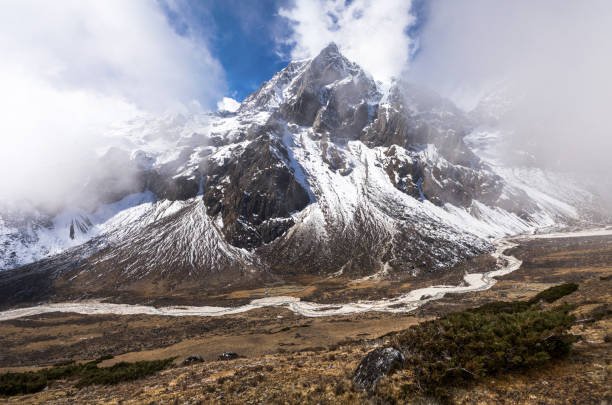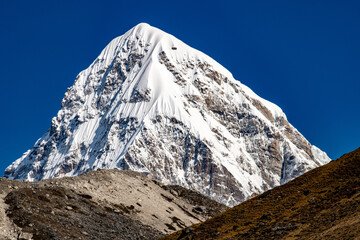
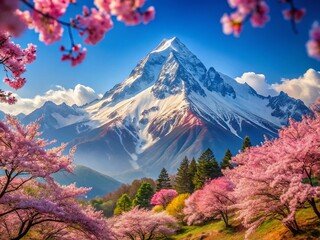
Pumori, standing at 7,161 meters, is a stunning Himalayan peak in Nepal’s Khumbu region, just 8 km west of Mount Everest. Its name, meaning “Mountain Daughter” in the Sherpa language, was given by the legendary British mountaineer George Mallory during his 1921 Everest reconnaissance expedition. Known for its striking pyramidal shape, dramatic ridges, and panoramic views of Everest, Lhotse, and Nuptse, Pumori is both visually captivating and technically challenging.
Although it is a demanding 7,000-meter climb, Pumori is considered achievable for experienced mountaineers with proper high-altitude training. This makes it a popular choice for those seeking a serious Himalayan expedition without attempting an 8,000-meter peak.
Trip Info
-
Autumn/ Spring
-
Fly/ Car/Jeep/ Tourist bus
-
5/6 hours.
-
Hotel / Tea Houses
-
7119m.
Overview
History of Pumori
- 1921: George Mallory and the British expedition first documented the peak while scouting Mount Everest, naming it “Pumori” or “Pumo Ri” — the daughter of Everest.
- 1962: The first successful ascent was achieved by a German-Sherpa team, establishing Pumori as a key climb in the Everest region.
- Over the years: Pumori has served as a training ground for mountaineers preparing for Everest and other major Himalayan peaks. Its mix of snow, ice, and rock terrain offers excellent practice for high-altitude expeditions.
Today, Pumori attracts climbers looking for a less crowded peak near Everest while still offering technical challenges, breathtaking scenery, and a true Himalayan climbing experience.
Trip Highlights
- Panoramic views of Everest, Lhotse, Nuptse, Cho Oyu, and Ama Dablam.
- Challenging but manageable technical climbing on a 7,000-meter Himalayan peak.
- Remote and adventurous trekking route through Sagarmatha National Park.
- Opportunity to gain experience for future 8,000-meter peaks.
- Exposure to Sherpa culture and high Himalayan villages.
Itinerary
Arrive at Tribhuvan International Airport in Kathmandu, Nepal’s vibrant capital. After completing airport formalities, you will be transferred to your hotel. Take some time to rest and acclimatize, or explore nearby areas at your leisure. Overnight stay at the hotel in Kathmandu.
Begin the day with an orientation and briefing about the Pumori expedition, including safety guidelines, route overview, and expedition protocols. Complete all necessary permit formalities for the climb, including the Sagarmatha National Park and climbing permits. Use the remaining time to check and organize your trekking and climbing gear. Overnight stay at the hotel in Kathmandu.
Take an early morning scenic flight from Kathmandu to Lukla (2,860m), known for its dramatic Himalayan airstrip. Upon arrival, meet your trekking team and begin the trek to Phakding (2,652m). The trail follows the Dudh Koshi River, passing through small Sherpa villages, suspension bridges, and lush pine forests. Enjoy your first day of trekking in the Everest region while taking in views of the surrounding mountains. Overnight stay at a teahouse or lodge in Phakding.
Start the trek from Phakding, following the Dudh Koshi River through picturesque forests and traditional Sherpa villages. Cross several suspension bridges, including the famous Hillary Bridge, and gradually ascend towards Namche Bazaar (3,440m), the bustling Sherpa hub of the Khumbu region. Take in stunning views of Thamserku and other surrounding peaks along the way. Upon arrival, explore Namche Bazaar’s vibrant market, cafés, and local culture. Overnight stay at a teahouse or lodge in Namche Bazaar.
Take a well-deserved rest day in Namche Bazaar to acclimatize to the higher altitude. Enjoy a short trek to the famous Everest View Hotel (3,800m), offering breathtaking panoramic views of Mount Everest, Lhotse, and Ama Dablam. Use this day to relax, take photographs, and explore the local culture and markets of Namche Bazaar. Overnight stay at a teahouse or lodge in Namche Bazaar.
Leave Namche Bazaar and trek through rhododendron and pine forests, crossing streams and small villages along the way. Arrive at Tengboche (3,870m), home to the famous Tengboche Monastery, the largest monastery in the Khumbu region. Take time to explore the monastery, enjoy its spiritual atmosphere, and soak in the stunning views of Ama Dablam, Everest, and other surrounding peaks. Overnight stay at a teahouse or lodge in Tengboche.
Depart Tengboche and continue trekking through scenic landscapes, crossing the Imja Khola River and passing through small villages. The trail gradually ascends into the Dingboche Valley (4,410m), surrounded by majestic peaks including Ama Dablam, Lhotse, and Island Peak. Dingboche is a picturesque village known for its traditional Sherpa culture and stone houses. Use the afternoon to rest and further acclimatize to the higher altitude. Overnight stay at a teahouse or lodge in Dingboche.
Leave Dingboche and follow a scenic trail along the Khumbu Glacier, passing memorials and mani walls that honor climbers of the Everest region. The trek gradually ascends through rocky terrain and moraines toward Lobuche (4,940m), a small settlement at the foot of towering Himalayan peaks. Take in spectacular views of Nuptse, Pumori, and other surrounding mountains while resting and preparing for higher altitude trekking ahead. Overnight stay at a teahouse or lodge in Lobuche.
Take a full day to rest and acclimatize at Lobuche, giving your body time to adjust to the higher altitude. Use the day to take short walks to nearby viewpoints, enjoy the breathtaking Himalayan scenery, and prepare for the upcoming climb toward Pumori Base Camp. This day is crucial for building endurance and preventing altitude sickness. Overnight stay at a teahouse or lodge in Lobuche.
Leave Lobuche and trek along the Khumbu Glacier toward Gorakshep (5,170m), a small settlement nestled in the shadow of Pumori and Kala Patthar. Enjoy panoramic views of Everest, Nuptse, and other surrounding peaks along the way. Gorakshep serves as a base for both Everest Base Camp treks and climbs in the region. Take time to rest, hydrate, and prepare for the next day’s trek to Pumori Base Camp. Overnight stay at a teahouse or lodge in Gorakshep.
From Gorakshep, begin the trek toward Pumori Base Camp (5,300m), following rugged trails with stunning views of Pumori’s towering pyramidal peak. The route passes moraines, rocky terrain, and glacial streams, offering a true high-altitude trekking experience. Upon arrival at Base Camp, take time to rest, soak in the breathtaking alpine scenery, and prepare for higher altitude climbing. This is a key day for acclimatization and getting familiar with the mountain environment. Overnight stay at a tented camp or high-altitude base camp.
This period represents the actual climbing phase of Pumori. A detailed day-to-day schedule is not fixed, as the expedition leader adjusts the pace according to the team’s fitness, acclimatization, and weather conditions.
The first few days are dedicated to:
- Training for climbing techniques
- Organizing food and supplies
- Practicing rope and ice skills
- Acclimatizing at Base Camp before moving higher
From Base Camp, climbers will pass three higher camps before attempting the summit:
- Base Camp: 5,300m
- Camp 1: 5,650m, located on Pumori’s lower slopes
- Camp 2: 6,000m
- Camp 3: 6,480m
Once at Camp 3, the team waits for ideal weather conditions to make the summit push to 7,161m. After a successful summit, climbers descend safely back through the camps to Base Camp, and eventually return to Lukla and Kathmandu.
After completing the summit climb and spending time at Pumori Base Camp, begin the descent toward Gorakshep (5,170m). The trail follows the Khumbu Glacier, offering stunning views of surrounding peaks like Pumori, Nuptse, and Everest. Take breaks as needed to rest and enjoy the alpine scenery. Overnight stay at a teahouse or lodge in Gorakshep.
Begin your descent from Gorakshep and pass through Lobuche (5,218m), enjoying spectacular views of the Khumbu Glacier and surrounding peaks. Continue descending gradually through alpine valleys, crossing streams and passing traditional Sherpa villages, until you reach Dingboche (4,410m). Use the evening to rest, recover from the high-altitude climb, and enjoy the serene mountain scenery. Overnight stay at a teahouse or lodge in Dingboche.
Continue your descent from Dingboche toward Tengboche (3,860m), passing through beautiful rhododendron and pine forests. The trail offers magnificent views of Ama Dablam and other surrounding peaks. Upon arrival, visit the famous Tengboche Monastery, the largest monastery in the Khumbu region, and enjoy its spiritual atmosphere. Overnight stay at a teahouse or lodge in Tengboche.
Descend from Tengboche through lush forests, crossing rivers and suspension bridges along the way, until you reach Namche Bazaar (3,440m), the vibrant Sherpa hub of the Khumbu region. Take time to explore the local markets, cafés, and shops, and enjoy the views of surrounding peaks. Overnight stay at a teahouse or lodge in Namche Bazaar.
Begin the final day of trekking from Namche Bazaar to Lukla (2,840m), retracing scenic trails through forests, rivers, and traditional Sherpa villages. Enjoy your last views of the majestic Himalayan peaks as you approach Lukla. Celebrate the successful completion of the expedition with your team. Overnight stay at a teahouse or lodge in Lukla.
Take an early morning scenic flight from Lukla to Kathmandu, enjoying breathtaking aerial views of the Himalayas. Upon arrival at Tribhuvan International Airport, you will be transferred to your hotel in Kathmandu. Spend the rest of the day relaxing, resting, or exploring the city at your leisure. Overnight stay at the hotel in Kathmandu.
This day serves as a buffer in case of flight delays from Lukla or unexpected changes in the expedition schedule. Spend the day resting, shopping, or exploring Kathmandu at your leisure. In the evening, join the team for a farewell celebration dinner, sharing memories and celebrating the successful Pumori expedition. Overnight stay at the hotel in Kathmandu.
After breakfast, you will be transferred from your hotel to Tribhuvan International Airport, Kathmandu, for your onward flight home. This marks the conclusion of your Pumori Expedition, completing an unforgettable journey through the Himalayas.
Includes/Excludes
Cost Includes
- All arrival and departure transfers to and from Airport both domestic and international.
- 3 Nights 3-star category Hotel accommodations in Kathmandu on BB Plan as per itinerary.
- 1:1 experienced private climbing Sherpa guide during trek and climbing Pumori.
- Flight tickets for Kathmandu-Manthali-Lukla and VV to the climbing member and his guide.
- Complete camping setup with dining & kitchen tents, chairs, and tables in Advance Base Camp.
- Necessary shower and toilet tents, individual member tents in ABC.
- One each tent for member & Sherpa sharing in Camp 1, 2, and 3.
- Solar panel/generator for light and battery charge in Advance Base Camp.
- Three meals a day (BLD, tea-coffee) and twin-sharing tea house accommodation during trek.
- Freshly cooked 3 meals (BLD), tea or coffee by a professional cook in the Advance Base Camp.
- Freshly cooked hot meal at Camp 2, prepared by our Camp-2 cook.
- 40 kg personal baggage while trekking up and 30 kg while down carried by porter.
- Expedition royalty and climbing permit for climbing Mt. Pumori (7,161m).
- Fully paid government-appointed liaison officer in the team.
- Necessary kitchen staff and camp manager in a sharing plan at ABC.
- Medical, accidental, and search and rescue insurance for all involved local staff.
- All rope fixing and Icefall management charges levied in the Expedition.
- Emergency oxygen mask and regulator in ABC for medical purposes only.
- Satellite phone in ABC available for members with a cost of US$ 4 per minute call.
- First Aid medical kits for the Group and the staff.
- Our service charge and Government Taxes levied in Nepal.
- Farewell Dinner in a typical Nepali restaurant with a domestic cultural show in Kathmandu.
Cost Excludes
- Lunch and dinner during your stay in Kathmandu (except farewell dinner).
- Expenses for usage of landlines, mobiles, walkie-talkies, satellite phone, and Internet.
- Clothing, packing items or bags, personal medical kit, camera/video fees, or trekking gear.
- Climbing Sherpa Guide, high-altitude food, and tents above ABC (Camp 1, 2, 3 & 4).
- Any extra expenses arising from unforeseen situations such as natural calamities, landslides, political disturbances, strikes, or changes in government regulations.
- Any additional staff other than those specified.
- Oxygen bottles, masks, and regulators for the member.
- Rescue, medicines, medical tests, and hospitalization expenses of the member.
- Medical and travel insurance, including helicopter search and rescue.
- Permits for walkie-talkies and filming if using a special camera.
- Personal climbing gear.
- Nepal customs duty for the import of expedition goods.
- Tips to Base Camp Staff (minimum US$300, per member).
- Any other item not mentioned in the “The Package Cost Includes” section.
FAQs
Pumori (7,161m) is a technically challenging peak that requires prior high-altitude trekking or climbing experience. While it’s considered more accessible than 8,000-meter peaks, climbers should be prepared for snow, ice, steep slopes, and variable weather conditions. Proper acclimatization, physical fitness, and climbing skills are essential for a safe and successful ascent.
The best climbing seasons are pre-monsoon (March–May) and post-monsoon (September–November). During these periods, weather conditions are generally stable, skies are clear, and temperatures are moderate, providing optimal conditions for trekking, acclimatization, and summit attempts.
Climbers need mountaineering gear, including crampons, ropes, ice axes, helmets, harnesses, and high-altitude clothing. A Pumori climbing permit from the Government of Nepal is required, along with a Sagarmatha National Park entry permit and liaison officer (if applicable). Your expedition operator usually assists with all permits and logistics.